Research date: October 17, 2026
Editorial note: This is a research-based overview, not investment advice or an election forecast. Election dates, legislative status, candidate details and campaign-finance totals should be rechecked against primary records before making time-sensitive decisions. Some figures below come from secondary reporting and advocacy-group analyses; their methodology and reporting cut-off can affect totals.
Executive summary
Cryptocurrency, especially Bitcoin, has become a meaningful source of political spending and a recurring federal policy issue ahead of the 2026 U.S. midterm elections. But the sector’s influence on campaign finance should not be confused with broad voter prioritization or a reliable forecast for crypto prices.
Several policy issues are especially consequential for the sector: implementation of the GENIUS Act’s federal stablecoin framework; the unresolved shape of broader market-structure rules, including the CLARITY Act; the division of responsibilities between the Securities and Exchange Commission (SEC) and Commodity Futures Trading Commission (CFTC); tax reporting; anti-money-laundering enforcement; and debates over central bank digital currencies (CBDCs), mining energy use and consumer protection.
Reuters reported on June 30, 2026, citing a Public Citizen report, that cryptocurrency interests had spent about $189 million to influence the 2026 election cycle by that point. The same reporting said Fairshake, a major pro-crypto super PAC, had received $82 million in donations during the cycle. These are dated estimates, not final election totals. (Sources: Reuters, June 30, 2026; Public Citizen.)
Public interest is more nuanced than campaign spending alone suggests. Pew Research Center reported in June 2026 that 19% of U.S. adults said they had invested in or used cryptocurrency, while Republican use had increased relative to 2021. Separate polling covered by crypto media found only a small share of voters said a candidate’s crypto stance would sway their vote. These surveys use different measures and should not be treated as directly interchangeable. (Sources: Pew Research Center; CoinDesk survey coverage.)
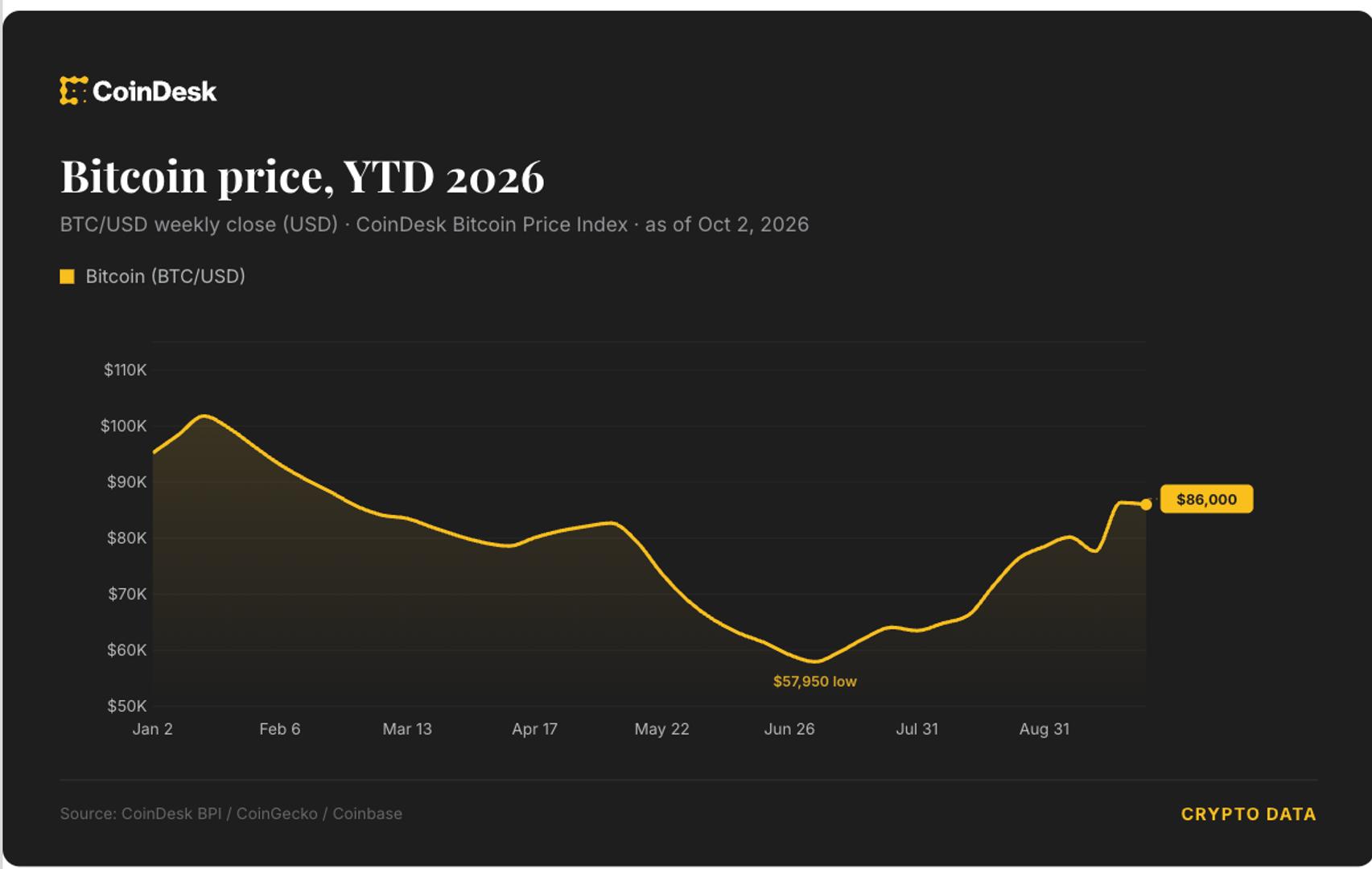
For Bitcoin markets, the defensible conclusion is not “midterms mean a rally” or “midterms mean a crash.” Election outcomes can affect expectations about regulation, taxes, enforcement and government demand, but prices also respond to interest rates, liquidity, ETF flows, leverage, global risk appetite and other factors. Historical patterns across a small number of midterm years are not a dependable trading rule.
1. What is at stake in the 2026 midterms?
The November 2026 federal midterms determine all seats in the House of Representatives and a portion of the Senate, alongside numerous state and local offices. Congressional control can affect committee leadership, hearing agendas, appropriations, confirmations and the chances of passing further digital-asset legislation. State-level outcomes matter too: states shape licensing, consumer-protection enforcement, energy policy and the rules governing political contributions in cryptocurrency.
For election dates, ballot rules and official candidate information, consult the relevant state election office and the Federal Election Commission (FEC). This report does not treat a candidate as the nominee or a race as competitive unless the referenced source supports that characterization at its reporting date.
2. The core federal policy questions
Stablecoins: implementation after the GENIUS Act
President Donald Trump signed the GENIUS Act on July 18, 2025, establishing a federal framework for payment stablecoins, including rules concerning permitted issuers and reserve backing. The political debate now includes how implementation is handled, what compliance costs mean for issuers and users, and how stablecoins affect payments and the market for U.S. Treasury assets. A stablecoin framework is not the same thing as a comprehensive legal framework for every crypto asset. (Source: Reuters, July 18, 2025.)
Market structure and SEC–CFTC jurisdiction
Crypto firms and advocates have sought clearer rules that define which digital assets fall under securities or commodities oversight and how exchanges, brokers and dealers should register. The CLARITY Act has been central to that debate. Its exact legislative status should always be checked in the official Congressional record before publication because House passage, Senate action and enactment are distinct stages.
Enforcement, illicit finance and consumer protection
The policy debate is not simply “regulation versus no regulation.” It includes how to distinguish lawful market activity from fraud, sanctions evasion, ransomware, terrorist financing and other crimes, while protecting consumers and preserving legitimate privacy. The Department of Justice announced a change in enforcement priorities in 2025, including disbanding its National Cryptocurrency Enforcement Team; Reuters reported that prosecutors were directed to focus more narrowly on serious criminal activity. (Source: Reuters, April 8, 2025.)
Tax reporting
The IRS issued final broker-reporting regulations for digital-asset dispositions, with reporting requirements applying to covered transactions from January 1, 2025. Taxpayers should keep records of cost basis, proceeds, transfers and taxable disposals and consult current IRS guidance or a qualified tax professional. Reporting rules do not mean every transfer between a person’s own wallets is itself a taxable sale. (Source: IRS guidance.)
Mining, electricity and CBDCs
Bitcoin mining can feature in debates about power-grid demand, local tax incentives, jobs and energy sources. Positions may differ by region depending on the local electricity mix and whether mining is viewed as an economic development opportunity or a cost imposed on other users. Separately, debates about a U.S. central bank digital currency concern privacy, financial surveillance, payments infrastructure and the role of government. CBDCs are distinct from decentralized cryptocurrencies such as Bitcoin.
3. Campaign-finance influence: what the numbers do and do not say
On June 30, 2026, Reuters reported that cryptocurrency companies had spent roughly $189 million on the 2026 U.S. election cycle, based on a report by Public Citizen. Reuters identified Andreessen Horowitz, Ripple Labs, Foris DAX (associated with Crypto.com) and Coinbase among major contributors to political committees advancing industry priorities. Reuters also reported that Fairshake had received $82 million during the cycle at that time. (Sources: Reuters; Public Citizen.)
These figures require careful reading. “Spent,” “contributed,” “raised” and “independent expenditures” are different categories. Total reported amounts may include different committees, entities or periods, and an advocacy organization’s classification may differ from the FEC’s official filing categories. Do not add figures across sources without checking for duplication. The latest FEC filings are the primary source for committee receipts and expenditures: FEC campaign-finance data.
Reuters’ August 3, 2026 report described crypto-related spending in a range of federal races, including Alabama and Kentucky Senate contests and several House districts. Those reported spending levels measure outside political activity, not direct proof of a candidate’s policy position, voter preference or eventual election result. (Source: Reuters, August 3, 2026.)
4. Candidate and party positioning: avoid oversimplification
Broadly, many Republican officials have emphasized U.S. crypto-sector growth, limits on a CBDC and a less enforcement-centered regulatory approach. Democratic officials include both advocates of blockchain innovation and lawmakers who place greater emphasis on investor protection, market integrity, illicit finance and oversight of industry influence. Those are broad tendencies, not reliable substitutes for an individual candidate’s record.
For accurate candidate profiles, review recorded votes, bill sponsorship, official campaign platforms, debate statements and FEC disclosures. A contribution or independent expenditure supporting a candidate does not establish that the candidate has endorsed every policy preference of the donor. Candidates’ primary-election status, district boundaries and positions can change; verify them against official sources before publishing a race-by-race update.
5. Public opinion and electoral salience
Pew Research Center reported in June 2026 that about 19% of U.S. adults had invested in or used cryptocurrency, broadly similar to the 16% figure it reported for 2021. Pew also found that 22% of Republicans and Republican-leaning independents reported crypto use, compared with 17% of Democrats and Democratic-leaning independents in its survey. These are self-reported experience measures, not measures of how much people own or whether they support a particular regulation. (Source: Pew Research Center.)
Separate polling discussed by CoinDesk and other outlets put cryptocurrency near the bottom of voters’ stated midterm priorities. The implication is that crypto may be a high-stakes issue for donors, industry participants and some voters while remaining secondary to inflation, jobs, healthcare, immigration and other everyday concerns for much of the electorate. Survey results depend on question wording, sample and field dates; figures from different polls should not be combined into one estimate.
6. Bitcoin prices and election events: correlation is not causation
Election events can move expectations about the regulatory environment, but attributing a daily Bitcoin price move to a single political event is difficult. The market trades continuously and reacts to Federal Reserve expectations, dollar strength, liquidity, spot ETF flows, derivatives positioning, exchange-specific developments, geopolitical risk and risk appetite across assets.
Some commentary compares Bitcoin’s performance during earlier midterm years and notes that price declines occurred before elections followed by later rebounds. The sample is small, the time windows can be chosen in different ways, and the 2014, 2018 and 2022 market environments differed materially. This is not robust evidence that the 2026 election will generate the same pattern.
A more credible event study would predefine event windows, use a consistent BTC/USD data source, compare returns and volatility with a broad crypto benchmark and risk assets, and control for major macroeconomic announcements where feasible. The analysis should report the window and source used and avoid implying that an observed price change proves causation.
7. Scenario matrix for the post-election policy environment
| Scenario | Possible policy pathway | Potential crypto-market interpretation | Key caveat |
|---|---|---|---|
| Clearer bipartisan market rules | Congress advances durable definitions, exchange rules and a workable SEC–CFTC division. | Could reduce some legal uncertainty and support institutional planning. | Details, implementation timelines and compliance costs matter more than slogans. |
| Gridlock or delayed legislation | Major market-structure proposals stall or move slowly. | Uncertainty may persist; firms may favor jurisdictions with clearer rules. | Markets can price in expectations before any bill passes. |
| More restrictive oversight | Lawmakers focus on consumer protection, illicit finance, tax compliance or systemic risk. | Some business models may face greater costs, while compliant providers may benefit from clearer enforcement standards. | “Restrictive” rules can affect tokens, intermediaries and stablecoins differently. |
| Pro-growth implementation | Agencies implement existing law with a focus on predictable registration and permitted market activity. | Could improve planning and confidence for some U.S. firms. | Regulatory easing does not remove price, custody, fraud or liquidity risks. |
These are analytical scenarios, not probabilities or predictions. The House and Senate may have different priorities, and legislation still requires the necessary procedural steps and presidential action.
8. What investors and crypto businesses should watch
- Legislative status: track bill text, committee action, floor votes, amendments and enacted law via Congress.gov.
- Campaign finance: check current filings and independent expenditures through FEC data, and treat secondary totals as estimates with a stated cut-off.
- Regulator implementation: follow the SEC, CFTC, IRS and FinCEN for official rules, releases and compliance deadlines.
- Market structure: monitor ETF flows, funding rates, open interest, liquidity, U.S. dollar and Treasury yields alongside political news.
- State policy: check state election offices and official statutes for crypto campaign-donation rules, mining or energy decisions, and licensing requirements.
9. Editorial opportunities for continued coverage
For a crypto news publisher, follow-up reporting can include: a state-by-state map of crypto campaign-contribution rules; a verified database of the most consequential 2026 congressional races and candidates’ documented votes; a running tally of FEC filings by crypto-linked PAC; explainers on the GENIUS Act and market-structure legislation; and a post-election tracker comparing policy proposals with committee assignments, bill introductions and agency actions.
Each story should identify the reporting cut-off, link to primary records, distinguish direct candidate statements from donor-funded advertising, and avoid treating political support as a guaranteed price catalyst.
Conclusion
The 2026 U.S. midterms matter to Bitcoin and the wider crypto sector because election outcomes can change the legislative agenda, oversight priorities and implementation environment. Large campaign-finance totals demonstrate organized industry engagement, but do not prove that crypto is a decisive issue for most voters. Nor do historical midterm price patterns reliably forecast Bitcoin’s next move. The strongest approach is to track official policy actions and verified finance disclosures while treating market outcomes as uncertain and influenced by many factors beyond Washington.
Sources and further reading
- Reuters: Crypto firms have spent $189 million so far on 2026 US election (June 30, 2026)
- Reuters: Which midterm candidates is the crypto industry backing? (August 3, 2026)
- Public Citizen: Corporate Super PACs and 2026 midterm spending
- Pew Research Center: About 1 in 5 Americans have used crypto (June 8, 2026)
- CoinDesk: Crypto near the bottom of U.S. voters’ priorities (May 3, 2026)
- Reuters: Trump signs stablecoin law (July 18, 2025)
- SEC: Dismissal of civil enforcement action against Coinbase (February 2025)
- Reuters: DOJ disbands crypto enforcement team (April 8, 2025)
- IRS: Final regulations and guidance on digital-asset broker reporting
- Federal Election Commission: Campaign-finance data
- U.S. Congress: Bill text and legislative status
- U.S. Securities and Exchange Commission; U.S. Commodity Futures Trading Commission; FinCEN
Disclaimer: This report is for informational and editorial purposes only. It is not financial, legal, tax or political-campaign advice. Verify current law, filings and candidate information before relying on them.
Leave a Reply