
Bitcoin market update — November 3, 2026 | Latest data refresh: BTC/USDT at $77,237.73, Binance market feed, 20:00 IST. Bitcoin is attempting to stabilise after a volatile stretch, but the broader structure remains fragile. Spot ETF outflows, exchange-related confidence concerns and a bearish 4-hour moving-average setup are limiting upside conviction.
Editorial note: Market prices and indicators move continuously. This report records the data snapshot retrieved for publication and distinguishes market-feed readings from reporting, third-party analysis and attributed statements.
Bitcoin price today: the latest BTC/USDT snapshot
At the latest refresh, Binance BTC/USDT was trading at $77,237.73, down 0.78% over 24 hours. The reported 24-hour range was $76,388.88–$78,150, with approximately 14,726.67 BTC in base-asset volume. This is an exchange-specific USDT quote, not a consolidated global BTC/USD price.
| Metric | Snapshot |
|---|---|
| BTC/USDT price | $77,237.73 |
| 24-hour change | -0.78% |
| 24-hour high | $78,150.00 |
| 24-hour low | $76,388.88 |
| 24-hour volume | 14,726.67 BTC |
| Source | Binance market feed via CryptoAudit |
Bitcoin chart and price structure
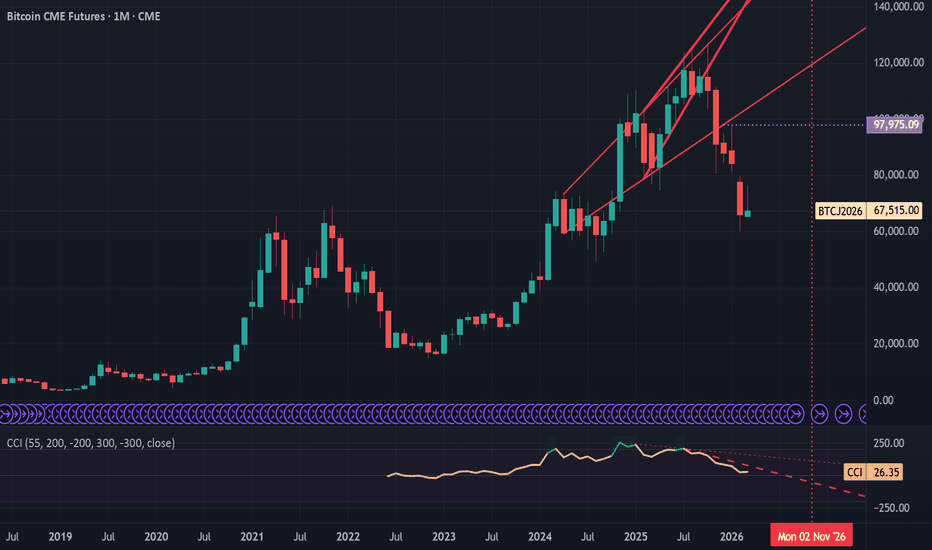
The daily candlestick view is useful for tracking the broader sequence of lower highs and the latest consolidation. Open the live BTC/USDT chart for current candles, volume and selectable timeframes:

View the BTC/USDT live chart on TradingView · View BTC/USDT on Binance
Technical analysis: bearish moving-average structure, mixed momentum
The 4-hour indicator snapshot refreshed at about 20:01 IST is cautious overall. The analysis module’s reference price was $77,291.98, below the 20-period simple moving average near $77,627, the 50-period average near $78,864, and the 200-period average near $81,927. This alignment remains consistent with a bearish trend structure.
| Indicator (4h) | Reading | Interpretation |
|---|---|---|
| RSI (14) | 40 | Neutral-to-weak momentum |
| MACD histogram | +9.67 | Small bullish crossover signal |
| SMA 20 | $77,627 | Above price; near resistance |
| SMA 50 | $78,864 | Above price; overhead pressure |
| SMA 200 | $81,927 | Longer-term overhead trend reference |
| ATR | $713.84 | Elevated absolute 4-hour range measure |
| Volume vs average | 1.31x | Above the indicator’s recent average |
What the indicators say: the MACD crossover hints that short-term selling pressure may be easing, but it has not yet reversed the moving-average structure. RSI at 40 is weak but not deeply oversold. A sustained move back above the 20-period and then 50-period averages would be more convincing evidence of improving momentum than a single intraday bounce.
Key Bitcoin support and resistance levels
The refreshed pivot calculations place the immediate battleground around $77,394. The nearest calculated support is around $76,901, followed by $76,509 and $76,016. On the upside, initial resistance is near $77,785, followed by $78,278 and the broader $78,285–$78,878 area.
| Level | Price (USD) | Role |
|---|---|---|
| R3 | $78,669 | Higher pivot resistance |
| R2 | $78,278 | Pivot resistance |
| R1 | $77,785 | Nearest pivot resistance |
| Pivot | $77,394 | Reference level |
| S1 | $76,901 | Nearest pivot support |
| S2 | $76,509 | Secondary support |
| S3 | $76,016 | Lower pivot support |
A clean break below $76,500 would put the $76,000 area back in focus. A sustained reclaim of $77,766–$78,285 would improve the near-term picture, while $78,878 is a further hurdle. These are scenario markers, not trading instructions.
ETF flows and institutional demand remain a key pressure point
For the latest Bitcoin developments, read our Bitcoin price and ETF outflows update for November 6.
CoinDesk reported on November 3 that U.S. spot Bitcoin ETFs recorded approximately $399 million in net outflows on Monday, their second consecutive day of withdrawals. The report said BlackRock’s IBIT accounted for roughly $405 million of Monday’s outflows. The previous session’s reporting put Friday’s net withdrawals at approximately $643.3 million, the largest single-day outflow since June 25.
ETF flows are often used as an indicator of demand through listed investment vehicles, but a daily outflow does not by itself prove that all institutional investors are bearish or explain the full movement in spot price.
Sources: CoinDesk — November 3 market report · CoinDesk — November 2 ETF-flow report.
Binance incident: exchange withdrawals and the official response
CoinDesk reported that Binance customers had withdrawn a net approximately $4.72 billion since withdrawals reopened on Sunday. The coverage also described a separate incident at Brazil’s Mercado Bitcoin, where around $40 million was reportedly drained from hot wallets, citing blockchain security firm Hypernative.
Separately, CoinDesk reported on October 30 that Binance estimated roughly $6.3 billion in assets had been stolen in the breach and about $3 billion had been frozen on-chain at that point. These are exchange-reported estimates, not independently audited final figures. The $4.72 billion figure above refers to net customer withdrawals reported as of Monday and should not be confused with the estimated value of stolen assets.
On October 30, Binance co-CEO Richard Teng also posted an update from his X account, @_RichardTeng, saying: “Your money is safe, and we’re covering every loss.” He described the estimated impact as about $6.3 billion and said roughly $3 billion had been frozen on-chain. View Richard Teng’s original X post. This is Binance’s own statement, not independent verification.
In comments reported by Reuters on November 3, Binance co-CEO Richard Teng said the exchange was in “very strong financial health”. Reuters reported that he said customer flows had largely normalised, 95% of affected tokens had been replenished and remaining less-liquid assets were being restored with over-the-counter providers. Teng also said the losses were covered by the Secure Asset Fund for Users (SAFU) and other company reserves, and that Binance would publish a post-mortem report.
These are Binance’s own assurances as reported by Reuters; they should be distinguished from independently audited proof. Reuters also reported that the FBI attributed the theft to North Korea, while North Korea denied responsibility.
Sources: Reuters — Binance co-CEO’s comments, November 3 · CoinDesk — market and exchange-flow coverage.
Macro watch: U.S. midterms and upcoming labour data
U.S. midterm elections are taking place on November 3. CoinDesk highlighted the election, the upcoming U.S. jobs report due November 6 and technology-sector earnings as near-term events watched by traders. Reuters’ November 3 global-market wrap described broader investor caution around AI-related spending and political uncertainty, with Bitcoin still unsettled after the crypto security shock.
Macro headlines can influence risk appetite, but a direct causal link to a particular Bitcoin candle should not be claimed without evidence. Traders will be watching how rates expectations, the dollar, equity-market volatility and ETF flows evolve after the event risk passes.
Sources: Reuters — Global markets, November 3 · CoinDesk — event-risk and derivatives coverage.
Market sentiment and large-order activity: conflicting signals
The CryptoAudit sentiment module returned a neutral reading of about 53/100, with increasing market interest. Its whale-activity module, however, flagged a distribution bias: a score near 69/100, distribution readings exceeding accumulation readings, six volume spikes over the preceding seven days and 24-hour volume up around 42.9% in that module.
These are proprietary indicator outputs, not verified wallet-flow totals or an independently audited measure of all whale transactions. They should be treated as directional context only. The sentiment feed also differs from CoinDesk’s report of a CoinMarketCap fear-and-greed reading of 34, illustrating that providers and methodologies can produce different snapshots.
Bitcoin scenarios to watch
- Stabilisation: BTC holds above $76,500 and reclaims $77,766–$78,285, with improving spot demand and a reduction in ETF outflows.
- Range-bound trading: price remains between nearby support around $76,500–$76,882 and resistance around $77,766–$78,285 while traders wait for clearer macro and flow data.
- Renewed downside: a sustained loss of $76,500 and then $75,998 would weaken the immediate structure and put lower liquidity zones in focus.
Tweets and statements: what is verified today?
This report includes a statement from Binance co-CEO Richard Teng’s X account and his later media comments. On October 30, Teng posted an update from @_RichardTeng stating, “Your money is safe, and we’re covering every loss,” alongside Binance’s estimate of roughly $6.3 billion in impact and about $3 billion frozen on-chain at that time. That is Binance’s own public statement, not independent verification. On November 3, Teng told reporters at Hong Kong Fintech Week that Binance was in “very strong financial health,” as reported by Reuters. That later comment is an attributed media statement, not a separate X post.
Read Reuters’ report containing Richard Teng’s statement.
What Bitcoin traders should monitor next
- Daily U.S. spot BTC ETF net flows and whether withdrawals persist.
- Whether BTC can reclaim the 4-hour 20- and 50-period moving averages.
- Price reaction around $76,500 support and $77,766–$78,285 resistance.
- Binance’s promised post-mortem and further independent updates on the security incident.
- November 6 U.S. employment data and the market’s response.
Final outlook
For a broader market context, see our crypto market report covering Bitcoin, Ethereum, altcoins and market sentiment.
Bitcoin’s immediate condition on November 3 is best described as cautious and technically weak, with early signs of short-term stabilisation. Price is below its major 4-hour averages, ETF flows have recently turned negative and the market is still absorbing exchange-security headlines. The neutral sentiment reading and small positive MACD crossover offer some counterbalance, but they are not yet enough to establish a durable bullish reversal.
Bottom line: the $76,500–$76,882 area is the immediate downside zone to monitor, while $77,766–$78,285 is the first meaningful recovery area. Confirmation from volume, spot demand and ETF flows will matter more than a brief price bounce.
Sources and methodology
- Binance BTC/USDT — exchange-specific market-price reference.
- CoinDesk, November 3, 2026 — ETF flows, Binance net withdrawals, derivatives and market context.
- CoinDesk, November 2, 2026 — Friday ETF outflows and institutional-demand context.
- Reuters, November 3, 2026 — attributed statement from Binance co-CEO Richard Teng.
- Reuters, November 3, 2026 — broader macro-market context.
- TradingView BTC/USDT chart — chart reference for readers.
Disclaimer: This article is for informational and educational purposes only. It is not investment, trading, legal or tax advice. Cryptocurrency markets are volatile; do your own research and consider your risk tolerance before making decisions.

Leave a Reply