

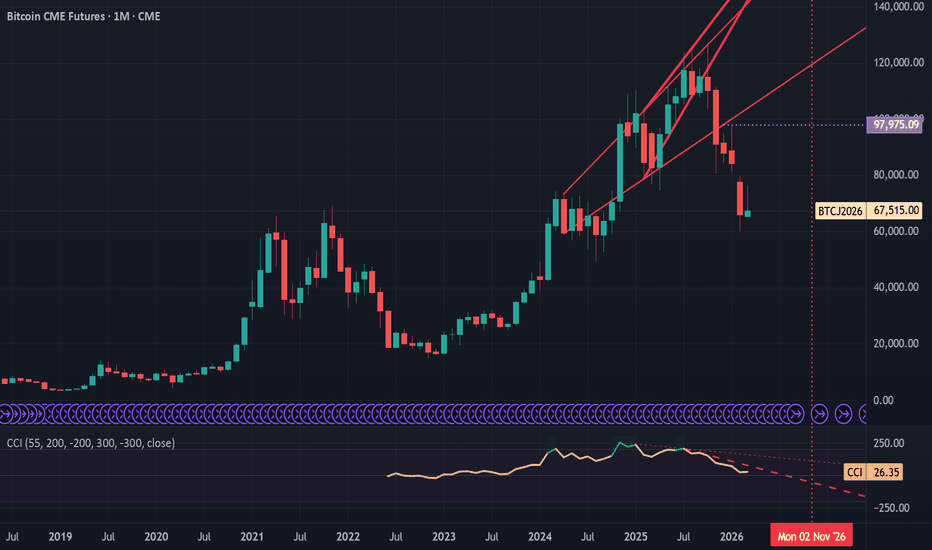
Bitcoin’s decline to about $63,400 has intensified debate over whether the market is entering a final capitulation phase or simply another leg lower. CoinDesk reported that Bitcoin fell roughly 7% after Friday’s U.S. market close and was down 15.6% over the week, while Ether, XRP and Solana also posted larger weekly losses.
What “capitulation” means in crypto
Capitulation describes a period when holders sell despite already-incurred losses because they no longer want to carry the risk. It often appears alongside sharp price declines, rising volume, liquidations and a change in market psychology from “buy the dip” to “get out before the next drop.”
Capitulation is not a precise technical signal. It is a description of behavior. A market can experience several capitulation events during one downtrend, and the first large flush does not necessarily mark the final low.
Why analysts are calling this the fourth wave
Analyst James Check described the move as the fourth capitulation event since Bitcoin’s latest all-time high. His interpretation is that many current sellers may have bought during the September rally above $80,000 and are now closing positions near the lower end of the range.
That pattern can create especially heavy selling because late buyers are more likely to use leverage or set tight risk limits. When price breaks important support, liquidations and stop-loss orders can reinforce one another. BitcoinAIUpdate previously covered the related liquidation pressure in Bitcoin Rebounds After $62K Weekend Low as Crypto Liquidations Near $2B.
Why a “deep value zone” is not a guaranteed bottom
Check described the current area as a “deep value zone” that has appeared during earlier selloffs. That observation may help frame risk and reward, but it cannot predict the next price move. A historical zone can be revisited several times, and macro conditions, ETF flows, leverage and broader liquidity can change between cycles.
Calling a bottom too early can be costly. Bitcoin may stabilize, form a base and recover, but it can also overshoot below previous range lows before buyers return. The safest conclusion is that the market is showing signs of stress and forced selling—not that a durable reversal has already been confirmed.
Signals that would strengthen a bottoming case
- Lower leverage: futures open interest and liquidation activity decline without another disorderly price break.
- ETF-flow improvement: spot Bitcoin funds begin to see sustained inflows rather than repeated withdrawals.
- Support recovery: Bitcoin reclaims broken levels and holds them on retests.
- Broader risk stabilization: technology stocks, credit and other liquidity-sensitive assets stop falling together.
- Seller exhaustion: large-volume declines become less damaging, suggesting fewer forced sellers remain.
What would argue against a bottom
A continued series of lower lows, accelerating ETF outflows, renewed exchange stress or a sharp rise in leveraged short and long liquidations would weaken the bottoming thesis. The market may also remain fragile if investors continue to raise cash for competing opportunities, as discussed in BitcoinAIUpdate’s analysis of the Anthropic IPO and crypto liquidity.
Bottom line
Bitcoin’s move toward $63,000 is consistent with a capitulation-style phase, but capitulation is a process rather than a single candle. The most useful question is not whether an analyst has declared a bottom. It is whether leverage, flows, liquidity and price structure begin improving together. Until those signals align, any rebound should be treated as a potential relief move rather than confirmation of a new uptrend.
Source: CoinDesk’s report on Bitcoin’s fourth capitulation wave.
This article is for informational purposes only and is not investment advice. Cryptocurrency markets are volatile, and readers should do their own research.


Leave a Reply