

Monday, November 16, 2026 · Evening edition · Market snapshot checked at approximately 7:40 PM India Standard Time (IST)
Crypto markets remained fragile on Monday after Bitcoin’s weekend fall to a four-month low. The session’s most consequential developments were not another token launch or exchange listing: Solana retired its long-running mainnet-beta label and moved to shared protocol versioning; Ethereum developers continued reviewing proposed state-growth gas changes; and security firms and affected teams disclosed fresh incidents involving Chain Games, Luxor and Kava Lend.
Editorial note: This report separates confirmed statements and observed data from analysis. A protocol proposal, a governance temperature check or a company’s recovery target is not treated as an implemented change.
Market snapshot: majors remain lower over 24 hours
CoinGecko live-page snapshot, approximately 7:40 PM IST, November 16, 2026. All prices are quoted in U.S. dollars (USD). The 24-hour and seven-day percentages below are CoinGecko’s rolling windows, not changes from the previous UTC daily close.
| Asset | Price (USD) | 24-hour change | 7-day change |
|---|---|---|---|
| Bitcoin (BTC) | $64,401.67 | -1.5% | -14.3% |
| Ethereum (ETH) | $1,799.67 | -1.8% | -14.8% |
| Solana (SOL) | $70.63 | -2.9% | -17.9% |
| XRP | $0.9558 | -1.4% | -14.1% |
| BNB | $589.34 | -0.9% | -14.5% |
CoinGecko’s global dashboard showed approximately $2.246 trillion in total crypto market capitalization, $66.93 billion in 24-hour trading volume, Bitcoin dominance of 57.4%, Ethereum dominance of 9.79% and a Fear & Greed reading of 19 (Extreme Fear). CoinPaprika provided independent USD cross-checks at asset-specific times: BTC $64,305.54 (19:56 IST), ETH $1,821.48 (19:58 IST), SOL $70.801 (19:38 IST), XRP $0.953859 (19:49 IST) and BNB $586.8276 (17:48 IST). Relative to the CoinGecko snapshot, differences ranged from about 0.15% to 1.21%; the BNB check was the oldest. These timestamps are not simultaneous, so small differences should not be read as arbitrage opportunities.
Market-data links: CoinGecko BTC · ETH · SOL · XRP · BNB · global market dashboard. Cross-checks: BTC, ETH, SOL, XRP and BNB.
Bitcoin market structure: weekend deleveraging, ETF outflows persist
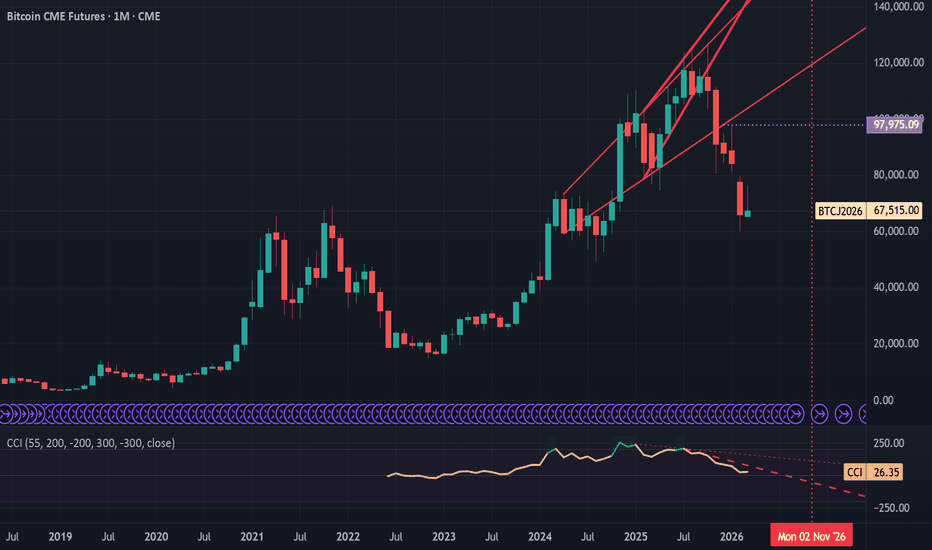
Fact: Bloomberg’s Business Standard syndication reported a November 15 low of $62,112, while a separate Bloomberg syndication via Moneycontrol reported $63,311. These are not identical prints; the exact intraday low varies by exchange and snapshot, so this report preserves the source-specific figures rather than treating one as a universal consolidated low. Bloomberg’s Business Standard snapshot counted about $2 billion in crypto liquidations over the preceding 24 hours, with long positions accounting for most forced closures. CoinDesk independently described the weekend flush as close to $2 billion and noted that Bitcoin had logged six consecutive weekly losses. These are provider snapshots with different cut-off times, not figures to add together.
Farside Investors’ daily U.S. spot Bitcoin ETF flow series shows seven consecutive sessions of net outflows from November 5 through November 13. Summing those daily entries gives approximately $1.9074 billion in net outflows; the latest completed session in the table, November 13, was -$185.4 million. Monday’s U.S. trading session had not yet opened at the time of this IST snapshot, so no November 16 daily ETF flow total was available.
CoinDesk’s derivatives snapshot also pointed to quieter but still defensive positioning after the flush: futures trading volume was down 47% to about $139 billion, open interest was nearly unchanged at roughly $108 billion, and funding was negative for most tracked tokens. Its reported 24-hour liquidation total had fallen sharply from the weekend peak. These are market-data snapshots, not evidence that selling pressure has ended.
Analysis: Lower futures volume after a liquidation spike can indicate reduced speculative activity, but it does not by itself establish a market bottom. Persistent ETF withdrawals, negative funding and a high fear reading show that risk appetite remains weak. The weekend low is a historical reference point, not a guaranteed support level.
Sources: Bloomberg via Business Standard, November 15 · Bloomberg via Moneycontrol, November 15 · CoinDesk market structure report, November 16 · Farside Investors — U.S. spot Bitcoin ETF flows.
Solana retires the mainnet-beta label and adopts shared protocol versioning
Fact: Solana’s official November 16 update says the network is dropping the mainnet-beta designation and adopting a shared protocol version number, beginning with Solana 1.0. The stated purpose is to make protocol-level compatibility easier to identify across validator clients and network releases.
This is a versioning and network-status change, not a new chain or token migration. Solana says users do not need to move funds or change wallet settings because of the label change. The Foundation separately points to Alpenglow’s earlier mainnet activation as a technical milestone that changes validator consensus and targets roughly 150-millisecond finality; that performance work should not be confused with the 1.0 naming change. Agave and Firedancer retain separate software release numbers, and operators should follow client-specific compatibility guidance.
Independent coverage: The Block and CoinDesk’s report.
Primary source: Solana Foundation — Solana 1.0 and what comes next.
Ethereum: EIP-8037 and EIP-8038 remain under review
Fact: Ethereum’s EIP-8037 proposes changing gas accounting for state creation and growth, with related work in EIP-8038. The goal is to make the cost of creating and retaining state more closely reflect the resources it consumes. BeInCrypto’s review of the current draft says a new storage entry could require about five times more gas, sending ETH to a brand-new address roughly seven times more, and deploying a large contract about eight times more; actual fees would still depend on network demand. Buterin has publicly supported the direction, but that does not mean the proposal has been accepted or activated on mainnet.
The Ethereum Foundation’s Glamsterdam update says the Hoodi testnet fork was postponed while audit findings and application-compatibility concerns are reviewed. The public agenda for All Core Developers Testing call #103 scheduled a discussion for 14:00 UTC on November 16 (7:30 PM IST); the agenda remained open and no final decision was recorded in the issue at the time of this review. The Foundation has pointed to the November 19 All Core Developers Execution call for possible next steps, without pre-committing to a decision.
Analysis: If adopted, higher gas costs for some account-creation, storage and contract-deployment operations could require application developers to revisit hard-coded gas assumptions. Until the EIPs are finalized and activated, users should not treat proposed costs as live network fees.
Primary sources: EIP-8037 · EIP-8038 · Ethereum Foundation Glamsterdam update · ACDT #103 public agenda. Independent reporting: The Block and BeInCrypto. For background, see our earlier Glamsterdam testnet-delay report.
Ledger adds clearer Solana transaction previews
Fact: Ledger says Clear Signing support for Solana is now available on compatible Ledger signers and its Solana app. The system translates supported program instructions into a more readable transaction summary before the user signs. Ledger says its implementation was tested against tens of thousands of transactions across multiple Solana programs; Decrypt reported an initial rollout covering nine apps and 18 of 22 common actions, including Jupiter and Kamino workflows.
Security limitation: Clear Signing is not a guarantee that a transaction is safe. Ledger’s documentation says instructions without a reviewed descriptor can still fall back to blind signing with a warning. Users should check the displayed recipient, amount, program and transaction intent before approving.
Sources: Ledger’s technical announcement · Decrypt’s rollout report.
Security desk: three incidents with affected-project or security-firm confirmation
Chain Games / CHAIN: Polygon staking contracts exploited
SlowMist’s Hacked tracker records a November 15 exploit of older Chain Games delegation-staking contracts on Polygon, with approximately 37.98 million CHAIN taken, valued at about $20,000 at the time. Chain Games’ own incident post says the attack occurred between 03:23 and 04:38 UTC, and that delegation was disabled across validators later that day. The team says the Polygon PoS bridge and CHAIN token contracts were not compromised; the affected component was the older staking-contract logic.
Chain Games says its pre-attack snapshot covers 78 delegators across 128 positions on 16 validators, plus validator stakes, and that all stakers, delegators and validators will be made whole. That is a compensation commitment, not proof that reimbursement has already been completed. The project described the attackers as using AI toolsets; the public technical account does not establish that AI was necessary to exploit the accounting flaw.
Sources: SlowMist Hacked tracker · Chain Games incident summary and post-mortem link.
Luxor: Commander software redirected mining hashrate
SlowMist’s tracker and Luxor’s public statement describe an unauthorized redirection of mining hashrate through Luxor’s Commander fleet-management software on November 14–15. Luxor said just over a dozen customer accounts were affected, Commander was patched in roughly two hours, no data was leaked, and affected customers would be compensated. Luxor said its Pool and LuxOS services were not affected. SlowMist’s tracker estimates the redirected hashrate value at about $10,500.
Luxor’s CEO described the attack vector as AI-enabled, but the company has not published a technical post-mortem explaining the method. That description is attributed to the CEO, not independently established as the mechanism. Sources: SlowMist Hacked tracker · Luxor’s incident statement · The Block · Cointelegraph.
Kava Lend: dormant BUSD market used to drain KAVA liquidity
The November 14 Kava Lend exploit remains an unresolved follow-up. The Block’s on-chain review found about 55.2 million KAVA borrowed through 127 loans after an attacker manipulated collateral accounting in a nearly empty BUSD market. That amount was worth about $3.76 million at the pre-attack price; roughly 49.2 million KAVA was bridged to BNB Chain and sold for about $2.1 million. These are different measures: pre-attack token value is not the same as realized sale proceeds.
Kava’s official statements described the event as isolated to Kava Lend, said it was not an infinite mint, and said the Axelar bridge was paused as a precaution. The Block reported that Kava had promised a full incident report but had not published a post-mortem or official loss figure in its latest cited update. SlowMist’s tracker also lists the incident. A reported proposal to permanently end new lending was not included here because I could not verify it in an official Kava governance record or verified project post.
Sources: SlowMist Hacked tracker · The Block’s on-chain report · Kava incident acknowledgement · Kava scope clarification · Kava bridge precaution and incident-report commitment.
No incident-specific advisory for these events was located in CISA’s public cybersecurity-advisory feed during this review. Security reporting above is limited to SlowMist’s incident tracker, affected-project statements and independent reporting; where a post-mortem or technical detail remains unavailable, it is identified as unconfirmed. CISA cybersecurity advisories.
Institutional tokenized money: DBS, JPMorgan and Project Simbolon
Fact: DBS and JPMorgan announced a connection between DBS Token Services and Kinexys Digital Payments to support institutional transfers of U.S. dollar tokenized deposits between Singapore and the United States. DBS says the service is designed for round-the-clock movement within the participating networks. The tokens represent bank deposits on permissioned systems; they are not a new public stablecoin or a retail crypto token. CoinDesk reported an important availability caveat: transfers inside the blockchain networks operate around the clock, but conversion between traditional accounts and JPMorgan’s blockchain accounts remains unavailable for a three-hour maintenance window each Saturday, 3–6 p.m. Eastern.
Separately, the Monetary Authority of Singapore and Deutsche Bundesbank announced Project Simbolon, a cross-border test of wholesale central-bank digital currency settlement for euro and Singapore-dollar transactions. The pilot used privacy-preserving proofs to validate settlement conditions across separate environments. It is a wholesale settlement experiment, not a public retail CBDC launch or a live production payment service.
Sources: DBS announcement · The Block · CoinDesk · MAS · Deutsche Bundesbank · CoinDesk.
Macro and regulatory watch
Federal Reserve Governor Michael Barr warned in a November 16 speech that widespread use of similar AI models in trading could contribute to herding, synchronized positioning and market-manipulation risks, while AI-enabled cyber activity could add operational risk. Barr added that, to his understanding, generative AI was not yet being used for autonomous trading at large scale. He also cited the Fed’s estimate that on-balance-sheet debt at the seven largest AI firms could exceed $800 billion before year-end and related off-balance-sheet obligations exceed $3 trillion; the report frames these as exposures to monitor, not proof of an imminent crisis. This is a financial-stability warning, not a crypto-specific rule and not evidence that AI caused the current crypto sell-off. Separately, NVIDIA’s board announced on November 12 that Jensen Huang had resigned as president, CEO and director, effective immediately; CFO Colette Kress became interim CEO and Harvey C. Jones became the board’s first chair. The company’s release did not state a reason for the resignation. NVIDIA’s SEC filing corroborates the transition. The company’s Q3 FY2027 results are due November 17, with the release expected at approximately 1:20 p.m. Pacific and the call at 2:00 p.m. Pacific. This is an AI-equity and technology-sector risk event; any effect on crypto sentiment is indirect. No new crypto-specific rule or enforcement action from the SEC, CFTC, U.S. Treasury, RBI, SEBI or FIU-IND, and no material new exchange policy notice, met the primary-source verification threshold in the releases reviewed for this edition.
Sources: Federal Reserve — Michael Barr speech, November 16 · Reuters · NVIDIA CEO-transition release · NVIDIA Form 8-K · Reuters on the first post-transition earnings briefing.
Next-day watchlist
- Tuesday, November 17 — NVIDIA fiscal Q3 2027 results: the company expects to release results at approximately 1:20 PM Pacific, followed by the call at 2:00 PM Pacific / 5:00 PM Eastern. The call converts to 3:30 AM IST on Wednesday, November 18. It will be the first results briefing after the November 12 CEO transition. AI-sector guidance may affect broader risk sentiment, but any crypto-market link remains indirect.
- Wednesday, November 18 — Federal Reserve FOMC minutes: scheduled for 2:00 PM Eastern, or 12:30 AM IST on Thursday, November 19.
- ETF flows: watch for the first completed U.S. spot Bitcoin ETF flow data for Monday’s session after U.S. markets close.
- Ethereum: track the November 19 execution-developer discussion for any concrete next step on EIP-8037/8038 and Glamsterdam testnet compatibility.
- Security follow-ups: look for Chain Games’ compensation implementation, Luxor’s promised technical post-mortem, and Kava’s promised Kava Lend incident report. Do not treat recovery commitments as completed reimbursements.
Calendar sources: NVIDIA investor relations · Federal Reserve FOMC calendar.
Related BitcoinAIUpdate coverage
- November 16 morning crypto brief
- November 15 weekend sell-off and liquidation report
- Ethereum Glamsterdam testnet-delay background
- Binance withdrawal-restoration update
Disclaimer: This article is for general informational and educational purposes only. It is not investment, trading, legal or tax advice. Cryptoassets are volatile and can result in the loss of capital. Verify information independently before making financial decisions.

Leave a Reply