
Bearish derivatives positioning on Binance has reached a rare extreme, with Bitcoin perpetual futures funding flipping to -0.0073%—its first negative reading since June 2026.
Derivatives snapshot
Data cut: November 22, 2026. Exchange: Binance BTC perpetual futures.
- Binance BTC funding rate: Fell to -0.0073%, below the neutral baseline of roughly 0.01%.
- Positioning shift: Short sellers are now paying long holders to keep bearish positions open.
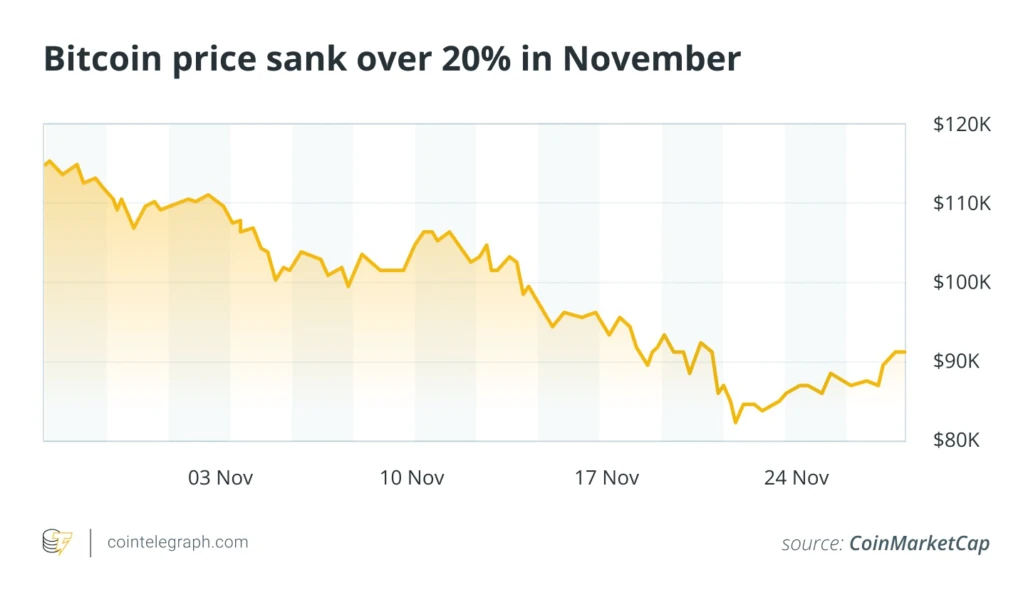
- Drawdown context: Bitcoin has shed roughly 17.4% in November alone and trades about 56.3% below its all-time high.
Source: Crypto Briefing report citing CryptoQuant analyst Darkfost.
Why negative funding matters
Perpetual futures contracts have no expiry date, so exchanges rely on periodic funding payments to keep contract prices anchored to spot Bitcoin. When funding turns negative, bearish bets have crowded the trade enough that shorts must compensate longs.
CryptoQuant analyst Darkfost highlighted that similar negative funding conditions appeared during Bitcoin’s climb from roughly $28,000 in October 2023 to $57,000 in September 2024, suggesting the current sell-off could be losing downside steam.
Macro headwinds still in play
Negative funding has a mixed historical track record and measures trader positioning rather than guaranteeing a price bottom. Crypto has not been falling in isolation: the Nasdaq has dropped more than 20%, and hotter-than-expected U.S. inflation has pushed market odds of a 25-basis-point Federal Reserve rate hike in December 2026 to 88.6%.
Related coverage: BitcoinAIUpdate weekend market report and November Bitcoin ETF outflow tracker.
What traders are watching next
- Whether Binance funding remains negative across multiple weeks rather than snapping back after a single dip.
- U.S. inflation releases and December Federal Reserve rate expectations.
- Bitcoin’s tight correlation with tech equities and the Nasdaq.
Disclaimer
This article is for general informational purposes only and is not financial or investment advice. Crypto assets are volatile; data may be revised and investors should review the original sources.

Leave a Reply