

Evening edition — Friday, November 13, 2026 | Updated 7:36 PM IST (14:06 UTC)
Market-data retrieval: initial snapshot at 7:08 PM IST (13:38 UTC); latest BTC/ETH refresh at 7:36 PM IST (14:06 UTC). All market prices below are quoted in U.S. dollars.
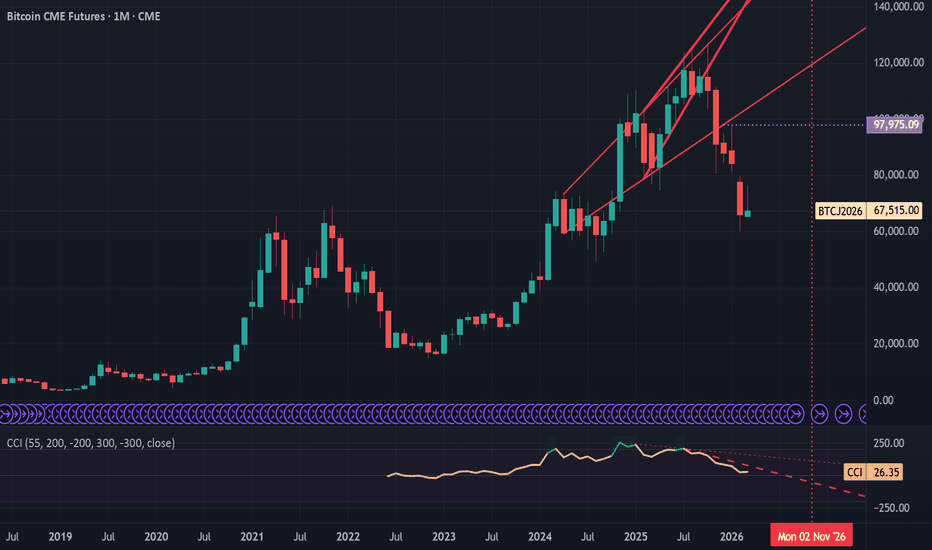
Bitcoin remained just below $70,000 in the evening market snapshots, while Ether traded near $1,969 in the latest 7:36 PM IST snapshot. The day’s major developments included a U.S. court-authorized action involving more than $1.2 billion linked to the Binance theft, fresh SEC and CFTC nominations, proposed exchange controls in Thailand and South Korea, a Visa stablecoin-settlement partnership, and an Ethereum security-roadmap debate and Osmosis network recovery.
Reporting standard: Confirmed facts are separated from analysis. Prices are time-stamped snapshots, not executable quotes. Where market-data providers’ 24-hour percentage changes diverged, this report uses the spot-price cross-check instead of presenting a blended return.
Crypto market snapshot: Bitcoin stays below $70,000
| Asset | CoinGecko snapshot — 7:08 PM IST | CoinPaprika cross-check |
|---|---|---|
| Bitcoin (BTC) | $69,779.29 | $69,151.29 — updated 1:19 PM UTC (6:49 PM IST) |
| Ethereum (ETH) | $1,956.61 | $1,954.56 — updated 1:23 PM UTC (6:53 PM IST) |
| Solana (SOL) | $80.62 | Not included in this cross-check |
| BNB | $647.43 | Not included in this cross-check |
| XRP | $1.03 | Not included in this cross-check |
Sources: CoinGecko BTC, CoinGecko ETH, SOL, BNB, XRP; CoinPaprika BTC and CoinPaprika ETH. In the latest cross-check at 7:36 PM IST (14:06 UTC), CoinGecko listed BTC at $69,642.41 and ETH at $1,968.64. CoinPaprika’s BTC page, updated at 13:54 UTC (7:24 PM IST), showed BTC at $69,654.14; its ETH page, updated at 13:57 UTC (7:27 PM IST), showed ETH at $1,968.31. The two providers’ latest USD price snapshots were closely aligned, so this report does not state one consolidated daily percentage change.
CoinGecko’s global dashboard at 7:36 PM IST (14:06 UTC) showed approximately $2.425 trillion in total crypto market capitalization and $101.4 billion in 24-hour trading volume. Bitcoin dominance was about 57.8%, Ether dominance about 9.94%, and CoinGecko’s Fear & Greed reading was 33, classified as Fear. These are provider-specific dashboard indicators, not official market benchmarks.
CoinGecko’s derivatives panels in the initial 7:08 PM IST snapshot showed roughly $44.99 billion in BTC perpetual open interest and $25.21 billion in ETH perpetual open interest. The displayed eight-hour funding rates were modestly positive at about 0.0010% for BTC and 0.0023% for ETH. Separately, The Block’s earlier Friday market report, using CoinGlass data at 12:10 AM ET (10:40 AM IST), recorded about $1.47 billion in rolling 24-hour liquidations, including roughly $1.31 billion in long positions; its four-hour window showed about $798 million in liquidations. Those liquidation figures are an earlier rolling-window snapshot, not a live 7:14 PM IST total.
Analysis: The long-heavy liquidation snapshot and elevated derivatives open interest indicate that leverage was an important part of the day’s market structure. They do not establish a single cause for Bitcoin’s price movement. The early-Friday low and the later evening price snapshots are from different providers and time windows.
Binance theft: DOJ obtains authority over more than $1.2 billion
The U.S. Department of Justice said on November 12 that it had obtained court authorization to seize or restrain more than $1.2 billion in cryptocurrency stolen from Binance. The department said government and private-sector partners had frozen more than $2.7 billion in assets linked to the October 29 theft, which it attributed to North Korean military members known to the FBI as TraderTraitor. The DOJ says tracing, freezing, seizure and forfeiture work is continuing as the stolen assets move through bridges, mixers and exchanges. Read the DOJ announcement, alongside independent reporting from Associated Press and The Block.
Important distinction: a court-authorized seizure or restraint is not the same as a final forfeiture, and it does not establish that every stolen asset has been recovered or returned to customers. The DOJ’s more-than-$2.7-billion figure covers the wider freeze effort; the more-than-$1.2-billion figure is the portion for which the department says it obtained court authority.
Binance separately said on November 12 that it had completed coverage of the assets affected by the incident, committing more than $6.34 billion in company funds. Its new Proof of Reserves snapshot covers 198 tokens and is timestamped 00:00 UTC on November 12. Binance said the full zero-knowledge proof would take approximately 40 to 50 hours to generate and that withdrawals were reopening in phases. Those are Binance’s own statements; the 40–50-hour estimate means the snapshot should not be treated as a completed zero-knowledge proof at publication. See the Binance announcement. Customer-asset coverage by the exchange is separate from law-enforcement recovery of the stolen funds.
The DOJ also described a separate North Korean social-engineering operation called FaceStealer. It said the campaign had stolen more than $400 million over 18 months and that the FBI seized more than 900 webcam videos. Attackers used meeting invitations sent from hijacked accounts, recordings or deepfake videos of trusted contacts, and fake audio/video-error prompts that led targets to install malware. This is a separate campaign and is not part of the $1.2 billion Binance seizure. The FBI’s FaceStealer information hub provides defensive guidance.
Security guidance: do not install a meeting plug-in, download a supposed audio/video fix, or run a terminal command supplied by someone during a call. Verify unexpected meeting requests through a separate channel, use the official meeting client, and keep wallet recovery phrases, signing devices and software-release credentials off general-purpose meeting workstations.
This is a follow-up to BitcoinAIUpdate.com’s earlier Binance breach and insurance-risk coverage and withdrawal and recovery update.
U.S. regulatory watch: four SEC and CFTC nominees sent to Senate
The White House said on November 12 that it had sent four nominations to the Senate: Nathan Anonick and Matthew Rowland for the Commodity Futures Trading Commission, and Kristin N. Johnson and Steven Levine for the Securities and Exchange Commission. The official White House list identifies the seats and terms. Bloomberg Law and The Block also reported the bipartisan slate.
The nominations could affect the agencies’ capacity to handle digital-asset market-structure and derivatives policy, but they do not change the rules today. Each nominee must still complete the Senate confirmation process. No new SEC or CFTC rule is created by the nomination announcement.
Asia regulation: Thailand drafts stablecoin limits; South Korea plans faster exchange freezes
Thailand’s Securities and Exchange Commission opened a draft consultation proposing separate daily limits of 5 million baht (about $148,000) for stablecoin deposits and withdrawals per customer at each regulated digital-asset operator. The draft would require customers to use wallets they own, with Travel Rule information-sharing and blockchain analytics used to screen suspicious flows. The SEC’s draft consultation page, Cointelegraph and The Block describe the proposal. The consultation opened November 12 and runs through November 26.
The proposal is a draft, not a rule already in force. Its scope is regulated operators and their customers; it should not be described as a universal cap on every self-custody wallet or every direct peer-to-peer transfer outside a licensed platform. The draft also discusses market-maker disclosures and a minimum size for certain off-platform trades.
South Korea’s Financial Services Commission said on November 12 that it would issue a no-action opinion letter allowing exchanges, under specified conditions, to suspend deposits and withdrawals when a hack is suspected rather than waiting for a breach to be conclusively established. The FSC also called for 24/7 monitoring, prompt incident response, minimal hot-wallet balances, higher cold-storage holdings and stronger insurance or reserves. The FSC’s official release is the primary source; Cointelegraph independently explains the planned measure. The no-action letter was described as forthcoming. TokenPost independently reported that the FSC had not set an issuance date, freeze duration or detailed conditions.
Institutional settlement: Visa adds Western Union’s USDPT
Anchorage Digital said Visa and eligible partners can now use Western Union’s USDPT stablecoin to settle obligations on VisaNet. USDPT is issued by Anchorage Digital Bank and launched on Solana earlier in 2026. The announcement makes USDPT the first Anchorage-issued stablecoin supported under this arrangement; the companies said they may consider additional Anchorage-issued tokens later. See the Anchorage announcement, with independent coverage from Decrypt and The Block.
What this means: the announcement concerns wholesale settlement between Visa and eligible network partners, not a new consumer Visa card balance or a promise that cardholders will directly pay merchants in USDPT. The companies did not identify the first participating partners or specify the blockchain used for the VisaNet settlement leg.
Project Meridian FX APAC: central banks test cross-system settlement
The Bank of England, Monetary Authority of Singapore and Bank of Thailand published the Project Meridian FX APAC technical report on November 13. It describes tests of atomic payment-versus-payment foreign-exchange settlement and multilateral netting across simulated RTGS and distributed-ledger test environments. The Bank of England technical report says the work was a proof of concept in non-live test configurations; the joint central-bank release provides the project context.
The prototype showed how different settlement systems could coordinate all-or-nothing FX payment legs, while also exposing integration, liquidity-reservation and operating-hours challenges. The Block’s report says the Bank of England is targeting a live synchronisation interface in 2028; that remains a future plan, not a live service. This is a wholesale financial-infrastructure experiment, not a public crypto launch or a new central-bank digital currency rollout.
Ethereum and Osmosis: roadmap debate and network restart
Ethlabs published a proposal arguing that Ethereum should prioritize post-quantum and post-AI security work under its PQAI27 initiative, including moving its Quick Slots proposal out of the Hegotá upgrade scope. The proposal is available on the Ethereum Magicians forum; CoinDesk covered the debate. This is an Ethlabs proposal, not an approved Ethereum protocol change. The Ethereum Foundation’s protocol priorities remain the official roadmap reference. The discussion concerns long-horizon cryptographic resilience; it is not evidence that current Ethereum wallets are imminently breakable.
Osmosis experienced a block-production halt late on November 12 and resumed at 10:53 UTC on November 13 after nearly four hours, according to TokenPost. The network said the incident caused no lost funds or block rollbacks. The Osmosis status page later showed mainnet services operational at 13:30 UTC (7:00 PM IST). The official status page did not state a confirmed root cause, so this is reported as an operational interruption, not a confirmed exploit. Exchange-side deposit routes can reopen separately from network block production, so users should check an exchange’s live status before sending OSMO.
Macro calendar: October PPI and tonight’s Federal Reserve speakers
The U.S. Bureau of Labor Statistics reported that October producer prices for final demand rose 0.3% month over month and 6.5% year over year. The measure excluding food, energy and trade services rose 0.5% month over month and 4.9% year over year. The headline monthly increase was slower than September’s 1.4%, while the annual rate remained elevated. See the BLS October PPI release.
The Federal Reserve’s November calendar lists Governor Michael Barr for 10:00 AM Eastern on Friday and Vice Chair for Supervision Michelle Bowman for 10:50 AM Eastern. That converts to 8:30 PM and 9:20 PM IST on November 13. The Federal Reserve events calendar is the source. These appearances are the next scheduled U.S. policy signals tonight; remarks should be assessed in context rather than treated as a direct crypto price forecast.
Saturday, November 14: next-day watchlist
- Check whether Binance publishes the full zero-knowledge Proof of Reserves proof and whether additional withdrawal networks reopen. The company’s 40–50-hour estimate is not a guarantee of completion.
- Watch for further DOJ or exchange updates on tracing, freezing and legally authorized recovery of the Binance theft proceeds.
- Monitor weekend liquidity and whether BTC remains near the $69,000–$70,000 area and ETH near $1,950–$2,000. These are observation levels from the current snapshot, not trading signals.
- Track the final wording and implementation conditions for South Korea’s no-action opinion letter, and Thailand’s stablecoin consultation through November 26.
- Verify OSMO deposit and withdrawal status at each exchange before transferring; network recovery and exchange resumption are separate operational steps.
- Assess the market response to tonight’s Barr and Bowman remarks and the October PPI data. No major U.S. BLS release or Fed speech was listed for Saturday on the official calendars reviewed.
Related BitcoinAIUpdate coverage
- Morning Bitcoin and crypto market brief — November 13
- Earlier Binance breach and exchange-risk coverage
- Binance withdrawal and recovery update
- Bitcoin ETF outflows and stablecoin liquidity
- Ethereum market update
Sources and methodology: Primary statements and technical documents were checked first where available: DOJ, Binance, the White House, Thailand’s SEC, South Korea’s FSC, Anchorage Digital, the Bank of England, Ethereum’s developer forum, Osmosis status, BLS and the Federal Reserve. Major enforcement and regulatory claims were cross-checked against independent reporting from AP, Bloomberg, The Block, Cointelegraph, Decrypt, CoinDesk and TokenPost. CoinGecko and CoinPaprika were used for market-price cross-checks. Retrieval times are stated above; rolling liquidation windows and exchange-side transfer status can change.
Disclaimer: This article is for general informational and educational purposes only. It is not investment, trading, legal or tax advice. Cryptoassets are volatile and may result in loss of capital. Verify prices, exchange notices and official documents before making decisions.

Leave a Reply