Published: October 17, 2026
Source post: Pete Rizzo (@pete_rizzo_), reposting a summary attributed to The Compound News. View the original post on X.
Disclosure: This article reports a market view attributed to Fidelity Global Macro Director Jurrien Timmer. A social-media post is not itself a Fidelity research note or a guarantee of future performance. This article is for information only and is not investment advice.
Fidelity macro director’s Bitcoin view draws attention
A post shared by The Bitcoin Historian account (@pete_rizzo_) on October 17 says Fidelity Investments’ Global Macro Director Jurrien Timmer believes Bitcoin does not need a new narrative to move significantly higher because it is becoming a more mature asset. The post also highlights Timmer’s view that Bitcoin’s market “winters” may be getting shorter and that a double-bottom pattern has been confirmed.
The message has a distinctly bullish interpretation: if Bitcoin can rise without a fresh story or catalyst, market participants should pay attention. But the viral post is a concise summary, not a full research note. The exact wording and context should be checked against Timmer’s original comments before drawing a strong conclusion.
What Timmer has reportedly said
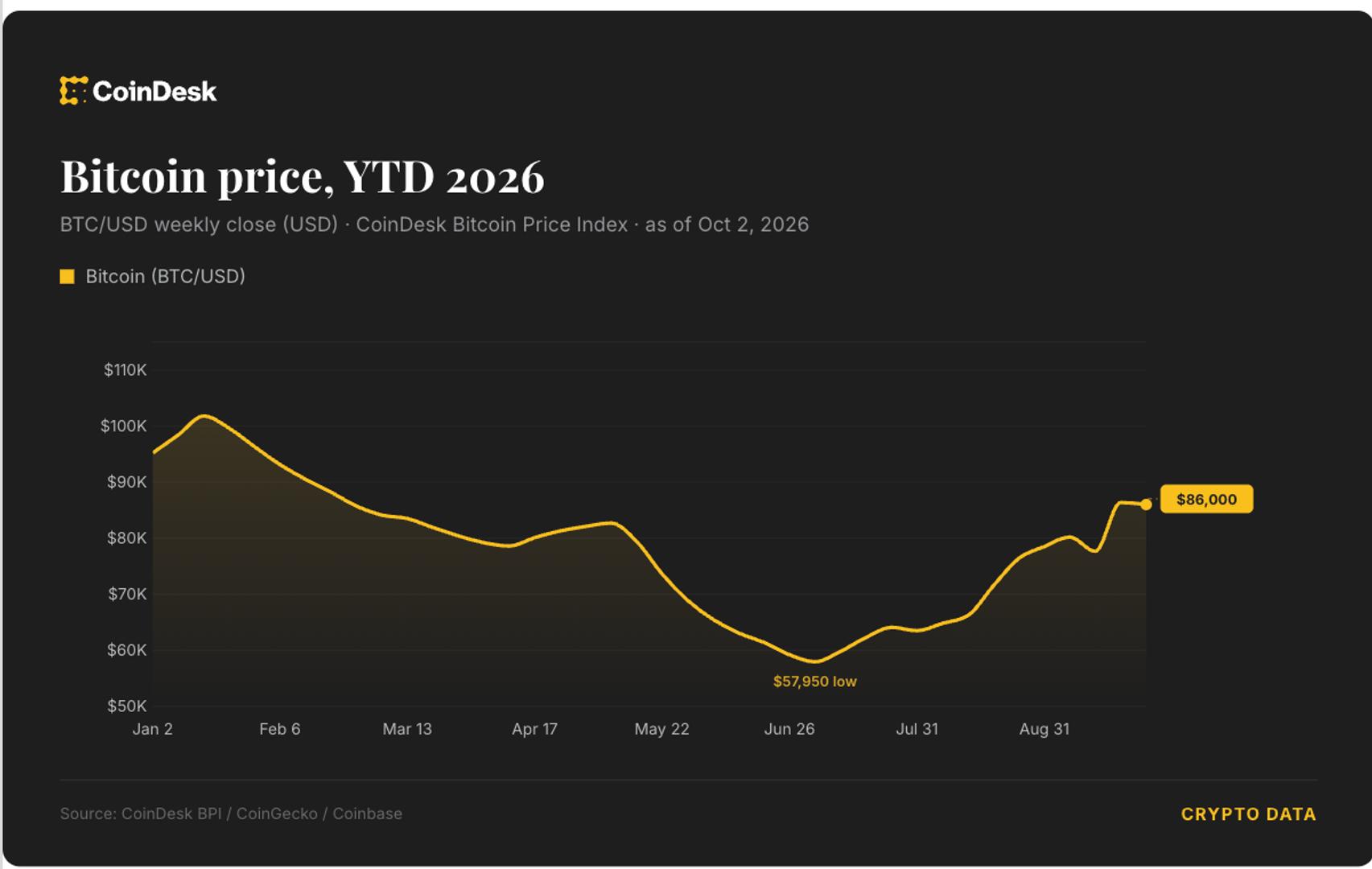
In coverage of an October 9 appearance on The Compound & Friends podcast, Timmer was reported to have said Bitcoin had likely bottomed after a double low around $58,000–$60,000 and its subsequent move above $80,000. He also described Bitcoin as a maturing asset, suggesting its future rallies and declines may become less extreme. Read the October 10 report via Yahoo Finance.
That coverage said Timmer’s cycle model had pointed to a peak near $150,000, while Bitcoin’s actual high was closer to $126,000. It also reported his view that both Bitcoin and gold could rise, with Bitcoin having more upside potential. These are attributed opinions and model interpretations, not confirmed future outcomes.
Why the “maturing asset” argument matters
The maturity thesis suggests Bitcoin could become more integrated into institutional portfolios and respond less dramatically to each new adoption story. Under this argument, an asset’s price can continue to appreciate as participation, liquidity and access develop—even when there is no single headline catalyst.
That possibility should not be confused with lower risk in absolute terms. Bitcoin remains volatile, trades around the clock, and can experience sharp drawdowns. A market can become more liquid or institutionalized without losing its sensitivity to macroeconomic conditions, leverage or shifts in investor appetite.
What a double bottom can—and cannot—tell traders
A double bottom is a chart pattern in which price tests a low area twice and then recovers above an intervening resistance level. Some technical analysts interpret it as evidence that selling pressure may be weakening. In the post’s summary, the two lows are described as being around $58,000–$60,000, with a subsequent move above $80,000 presented as confirmation.
Chart patterns are interpretive rather than certain. Confirmation depends on the timeframe, price series, resistance level and volume used. A breakout can fail, and a pattern identified after a large move may not provide the same information as it appeared to offer in real time. The supplied X post does not include the full chart or methodology required to independently test the claim.
What could challenge the bullish case?
- Macro conditions: higher bond yields, a stronger U.S. dollar or tighter financial conditions can reduce appetite for volatile assets.
- Market positioning: leveraged long positions can amplify a decline when price moves against them.
- Demand: sustained price appreciation still depends on buyers and liquidity; a narrative is not a substitute for demand.
- Cycle uncertainty: historical Bitcoin cycles offer context, but past drawdowns and recovery durations do not determine the next cycle.
In the October 10 coverage, Timmer was also reported to have warned that a U.S. 10-year Treasury yield near 5.3% was pressuring equities. Investors assessing his Bitcoin view should therefore consider broader financial conditions as well as technical price patterns.
What to watch next
For a more evidence-based assessment, readers can watch whether Bitcoin holds above the breakout area discussed by the source, how spot trading volume behaves on advances and pullbacks, and whether derivatives funding and open interest indicate crowded leverage. Changes in exchange-traded product flows and macroeconomic conditions can add context, but no single indicator confirms a direction on its own.
Most importantly, distinguish Timmer’s attributed outlook from the social-media account’s headline framing. “Higher soon” is a promotional interpretation, not a precise forecast with a stated probability or timetable.
Bottom line
The post reflects a bullish argument that Bitcoin’s market structure is maturing and that a double-bottom pattern points to improving price conditions. Recent coverage of Jurrien Timmer’s comments gives context to that view, but the underlying pattern and future price direction are not guaranteed. Investors should check the original remarks, the relevant chart timeframe and market data before treating the claim as a trading signal.
Sources
- Pete Rizzo (@pete_rizzo_) on X — October 17, 2026
- Yahoo Finance — Fidelity Global Macro Director Jurrien Timmer Says Bitcoin Has Bottomed and Should Beat Gold (October 10, 2026)
- Stocktwits — summary of Timmer’s comments (October 10, 2026)
Disclaimer: Cryptocurrency markets are volatile. This article is for educational and informational purposes and does not constitute financial, legal or investment advice.